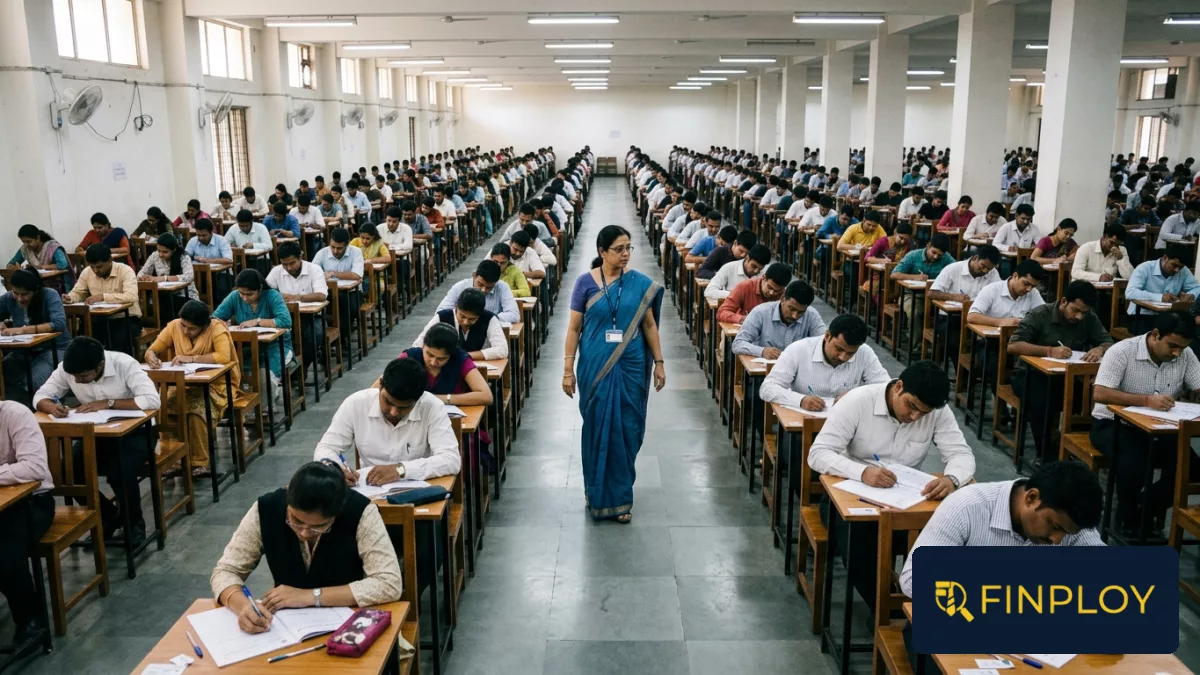
SBI PO 2026: Official Eligibility, Revised Exam Pattern, Selection Process, and Salary Structure
State Bank of India announced recruitment for 1,500 Probationary Officer posts under advertisement CRPD/PO/2026-27/09. This guide breaks down the eligibility criteria, revised examination rules, selection stages, and entry compensation.
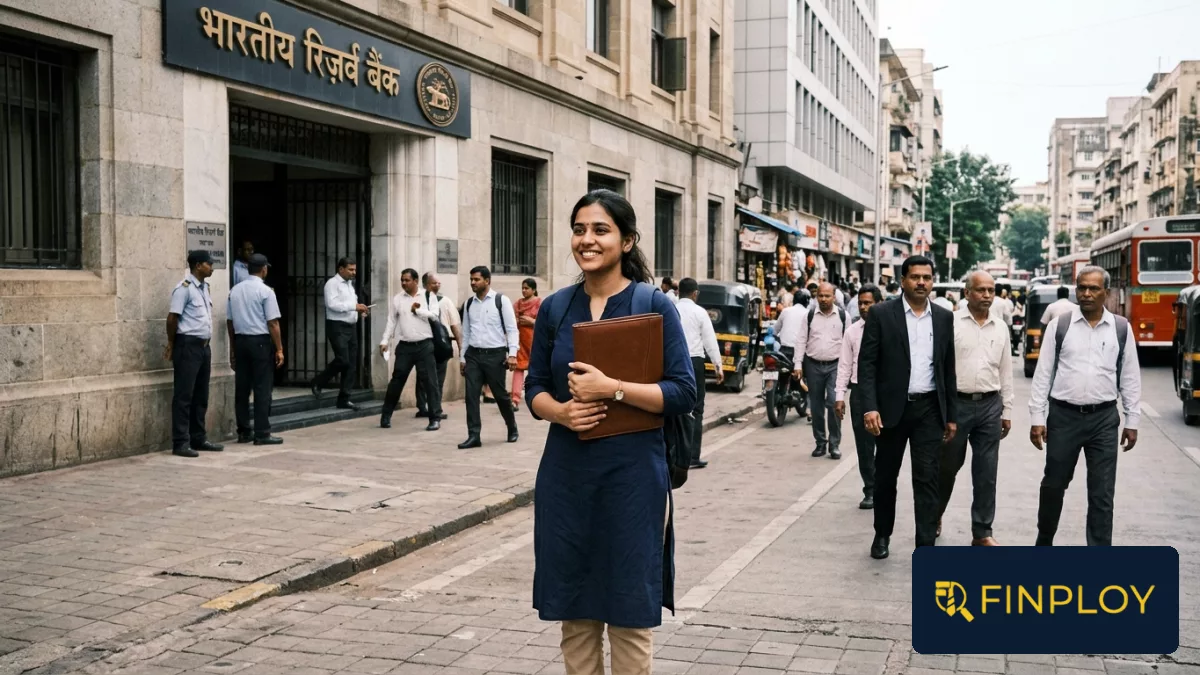
The State Bank of India released recruitment notification CRPD/PO/2026-27/09 on 18 June 2026 to fill 1,500 Probationary Officer positions across its network. According to official notification details published by State Bank of India, this hiring drive comprises 1,446 regular vacancies and 54 backlog vacancies. Entry into the country's largest public sector bank as a Probationary Officer remains one of the most structured pathways into Junior Management Grade Scale-I (JMGS-I) roles. Successful candidates assume executive responsibilities covering retail banking operations, credit processing, risk management, and branch administration.
Understanding the formal qualification criteria, selection stages, and key policy updates introduced in 2026 is critical for aspirants navigating competitive public sector banking examinations. This guide provides a factual breakdown of candidate eligibility, age relaxations, application guidelines, test patterns, scoring mechanisms, and total entry-level remuneration based on published recruitment documents and reporting from primary educational portals.
Recruitment Timeline and Key Process Milestones
The recruitment administrative schedule followed a strict timeline for candidate registrations, evaluations, and final onboarding steps. According to Career Power, online registration and application fee submissions opened on 18 June 2026 and closed on 8 July 2026. The initial evaluation phase moved swiftly, with the Phase-I Preliminary examination being held across test centers nationwide on 1 and 2 August 2026.
Candidates who qualified in the preliminary assessment progressed to the Phase-II Main examination, which was conducted on 12 September 2026, according to reporting by Career Power. The selection process concludes with Phase-III assessments, which include psychometric profiling, group exercises, and personal interviews scheduled throughout October and November 2026. Final recruitment results and merit placements are expected to be declared between November and December 2026.
Eligibility Standards: Age Limits and Age Relaxations
Candidate eligibility is governed by strict parameters regarding age, national status, and educational background. According to the State Bank of India recruitment notification, applicants must be Indian citizens aged between 21 and 30 years as of 1 April 2026. This indicates that eligible candidates must have been born not earlier than 2 April 1996 and not later than 1 April 2005, with both dates included.
Upper-age relaxations are granted to specific categories in accordance with government regulations. According to research published by EduTap, upper-age limits are extended as follows:
- Other Backward Classes (Non-Creamy Layer): 3 years of age relaxation, raising the upper limit to 33 years.
- Scheduled Castes (SC) and Scheduled Tribes (ST): 5 years of age relaxation, raising the upper limit to 35 years.
- Persons with Benchmark Disabilities (PwBD - Unreserved/EWS): 10 years of age relaxation, raising the upper limit to 40 years.
- Persons with Benchmark Disabilities (PwBD - OBC): 13 years of age relaxation, raising the upper limit to 43 years.
- Persons with Benchmark Disabilities (PwBD - SC/ST): 15 years of age relaxation, raising the upper limit to 45 years.
Academic Qualifications and Provisional Application Conditions
Educational requirements stipulate that candidates must possess a Bachelor’s degree in any discipline from a recognized university, or hold an equivalent qualification recognized as such by the Central Government, according to EduTap. There is no restriction regarding minimum percentage marks obtained during graduation.
Final-year and final-semester undergraduate students were also permitted to apply on a provisional basis. However, according to EduTap, such candidates were required to produce documentary proof of having passed the graduation examination on or before 30 September 2026 during candidate verification procedures. Candidates holding dual degrees or professional qualifications such as CA, CMA, or CS are equally eligible provided their basic degree satisfies the graduation norm.
Attempt Limits and Policy Changes Introduced in 2026
The 2026 recruitment cycle introduced notable policy adjustments regarding examination attempts and eligibility criteria. According to reports from Bankersadda, the State Bank of India expanded the maximum permissible attempt limits for general and reserved categories. Unreserved (UR) and Economically Weaker Section (EWS) candidates are now permitted up to 6 attempts, an increase from the previous limit of 4 attempts. Candidates belonging to OBC and PwBD categories are permitted up to 9 attempts, whereas candidates from SC and ST categories face no restrictive attempt limits.
It is crucial for candidates to understand how an attempt is officially calculated. According to PrepMatic AI, an attempt is counted only when an applicant actually sits for the Phase-II Main Examination. Appearing solely for the Phase-I Preliminary examination does not exhaust or count toward a candidate's maximum attempt limit.
Additionally, administrative rules governing application fees and candidate background criteria underwent revisions. According to Vocab24, the application fee for General, EWS, and OBC candidates was set at ₹750, while candidates belonging to SC, ST, and PwBD categories were granted full fee exemptions. Furthermore, according to Vocab24, a corrigendum released on 1 July 2026 officially removed a previously restrictive CIBIL credit score clause from the recruitment guidelines, ensuring that applicant credit histories would not act as a disqualifying entry barrier.
Selection Stage 1: Phase-I Preliminary Examination Pattern
The candidate evaluation process operates across three formal phases. According to Smartkeeda, the selection procedure consists of Phase-I (Preliminary Exam), Phase-II (Main Exam consisting of Objective and Descriptive tests), and Phase-III (Psychometric Test, Group Exercise, and Personal Interview).
The Phase-I Preliminary examination serves purely as a qualifying screening test to shortlist candidates for the main examination. According to Adda247, the prelims test consists of an objective paper carrying 100 total marks with a duration of 1 hour (60 minutes). The paper is structured into three distinct sections, with a fixed sectional timing of 20 minutes allocated to each section:
- English Language: 30 questions, 30 marks, 20 minutes duration.
- Quantitative Aptitude: 35 questions, 35 marks, 20 minutes duration.
- Reasoning Ability: 35 questions, 35 marks, 20 minutes duration.
According to Adda247, a penalty of 0.25 marks is deducted for every incorrect answer marked in the objective test. Importantly, there are no sectional cut-off marks in the Phase-I examination; candidates are shortlisted for the next stage purely based on their aggregate score achieved across all three sections relative to total available vacancies.
Selection Stage 2: Phase-II Main Examination Structure and Revisions
Candidates who qualify in Phase-I advance to the Phase-II Main examination, which evaluates advanced analytical, quantitative, financial awareness, and communication competencies. According to Smartkeeda, total marks for the Phase-II Main examination were revised in 2026 from 250 marks down to 230 marks.
The Phase-II Main examination comprises two parts conducted on the same day: an Objective Test carrying 200 marks and a Descriptive Paper carrying 30 marks (reduced from the earlier 50-mark structure, according to Smartkeeda). The Objective Test spans multiple subjects, including Reasoning and Computer Aptitude, Data Analysis and Interpretation, General/Economy/Banking Awareness, and English Language. The revised Descriptive Paper allocates 30 minutes for candidates to complete online letter writing and essay writing tasks designed to test written business communication skills.
According to Adda247, similar to the preliminary stage, no sectional cut-off marks apply to the Phase-II Main examination. Aggregate scores obtained in the Main examination determine which candidates progress to the final assessment phase.
Selection Stage 3: Phase-III Psychometric Profile, Group Exercises, and Interview
The final stage of the recruitment process assesses personal suitability, leadership qualities, communication efficiency, and behavioral traits required for managerial roles in banking. According to Adda247, Phase-III begins with a mandatory Psychometric Test aimed at personality profiling. The results of this psychometric assessment are shared directly with the interview panel to assist in candidate evaluation.
Following the psychometric test, candidates undergo Group Exercises and a Personal Interview. According to Adda247, the combined weightage for Group Exercises and the Personal Interview is 50 marks. Final merit listing is compiled by normalizing and combining scores from the Phase-II Main examination and Phase-III evaluation. Marks obtained in the Phase-I Preliminary test are qualifying in nature and are not included when calculating final candidate rankings.
Pay Scale, Compensation Structure, and Employment Terms
Selected candidates are inducted into the bank under the Junior Management Grade Scale-I (JMGS-I). According to PracticeMock, the base pay scale structure for Probationary Officers is defined as ₹48,480–₹2,000/7–₹62,480–₹2,340/2–₹67,160–₹2,680/7–₹85,920.
According to report analysis from Bankersadda, newly appointed Probationary Officers receive 4 advance increments at initial entry, bringing their starting basic pay to ₹56,480 per month. In addition to basic pay, officers receive allowances including Dearness Allowance (DA), House Rent Allowance (HRA) or leased accommodation, City Compensatory Allowance (CCA), and medical reimbursements.
According to PracticeMock, the total annual Cost to Company (CTC) for an entry-level Probationary Officer posted at major centers such as Mumbai is estimated at approximately ₹21.97 lakh. The estimated monthly net in-hand salary generally ranges between ₹80,000 and ₹85,000, depending on posting location, official accommodation choices, and statutory deductions.
Upon selection, candidates enter a service commitment. According to Sreedhar's CCE, appointees undergo a mandatory 2-year probation period during which continuous training and performance assessments are conducted. Furthermore, selected candidates are required to execute a service bond valued at ₹2 lakh, agreeing to serve the bank for a stipulated minimum tenure.
Finploy Job Market Insights: BFSI Hiring Context
While clearing the SBI PO examination offers a structured entry into public sector banking, understanding broader commercial banking and financial sector hiring trends provides valuable perspective for aspirants and finance professionals. Data from Finploy illustrates the present hiring landscape across banks, Non-Banking Financial Companies (NBFCs), and financial service institutions in India.
| Metric / Location | Finploy Sector Listings & Distribution |
|---|---|
| Total Open BFSI Jobs Listed | 43,262 active openings |
| Mumbai | 11,232 open positions |
| Bengaluru | 1,163 open positions |
| Pune | 1,116 open positions |
| Chennai | 1,031 open positions |
| Hyderabad | 834 open positions |
| Bangalore | 570 open positions |
| Thane | 528 open positions |
| Kolkata | 456 open positions |
As reflected in Finploy data, major economic hubs like Mumbai lead national hiring with 11,232 active openings, demonstrating significant demand for credit analysts, operational managers, risk officers, and relationship management personnel across wholesale and retail banking operations. Regional centers such as Pune, Chennai, Hyderabad, and Kolkata also present continuous employment opportunities for qualified financial talent.
Practical Implications for Banking Career Aspirants
The revisions made to the SBI PO 2026 exam pattern—specifically the reduction in descriptive paper marks to 30 and the increase in permissible attempt limits to 6 for Unreserved/EWS candidates—reflect a practical evolution in candidate evaluation. Aspirants preparing for JMGS-I positions need to build balanced competencies in quantitative analysis, logical reasoning, current economic awareness, and precise written communication.
Given the rigorous selection process and the 2-year probation period accompanied by a ₹2 lakh service bond, candidates entering State Bank of India gain early exposure to broad institutional operations, enterprise credit evaluation, and branch management. This foundational experience remains highly valued across the wider Indian banking and financial service ecosystem.

Archana Jain
Archana Jain is the Founder and CEO of Finploy Technologies, a recruitment platform built exclusively for banking, financial services and insurance (BFSI) hiring in India and Singapore. She has led Finploy since 2020 and has been Chief Operating Officer of Deeesha Finance & Finploy Finance Employment since 2016. Her work focuses on bank and NBFC hiring: leadership roles, home loan and LAP sales, CASA and retail banking, credit and underwriting, collections and recovery, and relationship management, across 1,500+ locations in India. She reviews Finploy Insights articles before they are published.