
Money
Banks Revise Fixed Deposit Rates After RBI's First Repo Hike Since 2023
The RBI raised the repo rate by 25 basis points to 5.50 percent on 7 October 2026. Banks have since revised fixed deposit rates on select tenures.
 Chat us
 Call us
Income tax, PF, gratuity, salary slips, loans and EMIs explained for working people.
The RBI raised the repo rate by 25 basis points to 5.50 percent on 7 October 2026. Banks have since revised fixed deposit rates on select tenures.

Employers must file the return and deposit October 2026 provident fund (PF) contributions by 15 November 2026, which falls on a Sunday this year. EPFO has reminded employers of the date, and no extension has been announced. Here is how salaried staff in banks, NBFCs and insurers can check that their PF money has arrived, and what to do if it has not.

EPFO's Central Board of Trustees meets for the 240th time on 19 November 2026. The venue has moved from Gir, Gujarat, to EPFO's head office in New Delhi. Media reports say the board may consider raising the minimum EPS pension from ₹1,000 a month, possibly to ₹3,000. Nothing is decided yet. Here is how EPS works and why it matters to bank and NBFC staff.

When you change jobs mid-year, each employer may deduct tax as if its salary were your only income. Both may give you the ₹75,000 standard deduction, and the shortfall shows up when you file. From tax year 2026-27, Form 122 (which replaces Forms 12B and 12BAA) lets you tell your new employer what you earned and what tax was deducted earlier.

Since 1 November 2026, mutual fund company websites and apps show direct plans as the default choice for self-directed investors. Existing regular-plan holdings and SIPs do not switch on their own.

The Employees' Provident Fund Organisation has detailed joining rules and eligibility criteria for EPF, EPS, and EDLI following the statutory wage ceiling expansion to ₹25,000 per month. The guidelines impact monthly take-home pay, pension building, and employer cost structures across India's formal financial services sector.

The Pension Fund Regulatory and Development Authority has introduced revised scheme naming and platform display guidelines for the National Pension System, taking effect on December 1, 2026. The changes aim to improve transparency for subscribers while driving compliance, tech, and advisory requirements across Indian financial institutions.

Eligible Employees' Provident Fund subscribers can withdraw up to 90 percent of their accumulated savings under 2026 rules to clear outstanding home loan liabilities or purchase residential property. While prepaying home loans reduces short-term debt and interest obligations, financial advisors urge salaried workers to evaluate the trade-off between lowering monthly EMIs and preserving long-term retirement compounding.

The Employees' Provident Fund Organisation has launched WhatsApp query services and automatic claim settlements for dormant accounts up to ₹1,000. These initiatives streamline subscriber access while reducing administrative workloads for corporate payroll and banking operations teams.

Salaried workers across India experienced lower monthly take-home pay in their October 2026 salaries following the statutory EPF wage ceiling revision to ₹25,000 per month. While the shift reduces net in-hand income, it expands mandatory social security coverage and boosts long-term retirement savings.

The Union Cabinet approved a 3 percentage point increase in Dearness Allowance to 63 percent for central government employees and pensioners, effective retroactively from July 1, 2026. This guide details the salary payout math, tax implications, and macro financial impact across banking, insurance, and NBFC sectors.

The Pension Fund Regulatory and Development Authority has extended the implementation date for its updated Point of Presence fee structure across NPS and NPS Lite to December 1, 2026. This deferral provides banks, NBFCs, and Central Recordkeeping Agencies additional time to integrate automated fee collection systems while reshaping intermediary hiring and revenue models.

The Employees' Provident Fund Organisation has extended the September 2026 ECR filing and statutory contribution deadline to October 31, 2026, following the mid-month increase in the monthly wage ceiling to ₹25,000. This guide details the split-payroll rules, salary impacts, employer cost structures, and current BFSI hiring trends for compliance specialists.
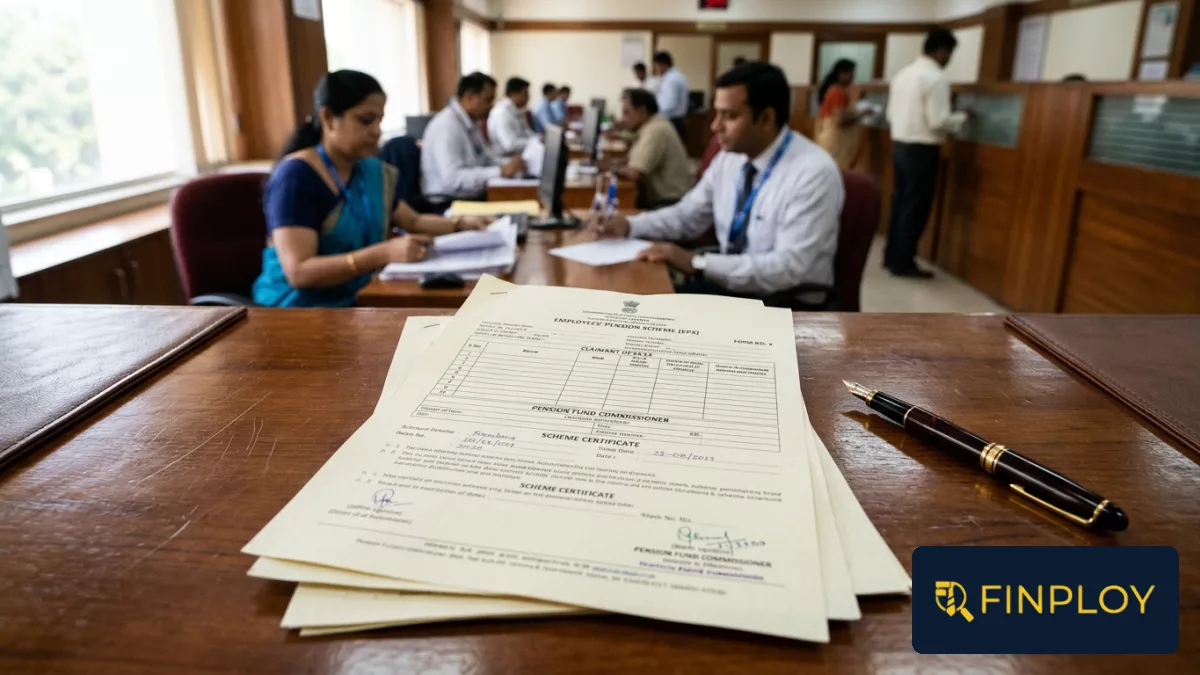
The Pension Fund Regulatory and Development Authority has introduced NPS Central, a unified portal integrating services across Protean, KFintech, and CAMS. This infrastructural shift alters subscriber onboarding while driving demand for specialized IT, product, and cross-domain advisory roles across the BFSI sector.

The Employees' Provident Fund Scheme, 2026 restructured PF withdrawal rules in June 2026, including a 25% minimum balance retention rule. Separately, EPFO had already raised the auto-settlement cap for advance claims to ₹5 lakh in June 2025. This guide covers both changes, the withdrawal forms (19, 31, 10C) and the tax rules that apply.

Understanding the distinction between Cost to Company (CTC) and monthly take-home salary is critical for salaried professionals evaluating job offers in India. This guide outlines how statutory EPF revisions, tax deductions, and the 50 percent wage rule affect actual cash flow.