Paytm Parent One 97 Communications Reports Q2 FY27 Net Profit of ₹226 Crore
One 97 Communications reported a consolidated net profit of ₹226 crore for Q2 FY27, backed by a 28 percent year-on-year growth in operational revenue to ₹2,648 crore. The expansion in financial services and cloud investments continues to drive hiring demand for credit risk, technology, and alliance management talent across Indian banks and NBFCs.
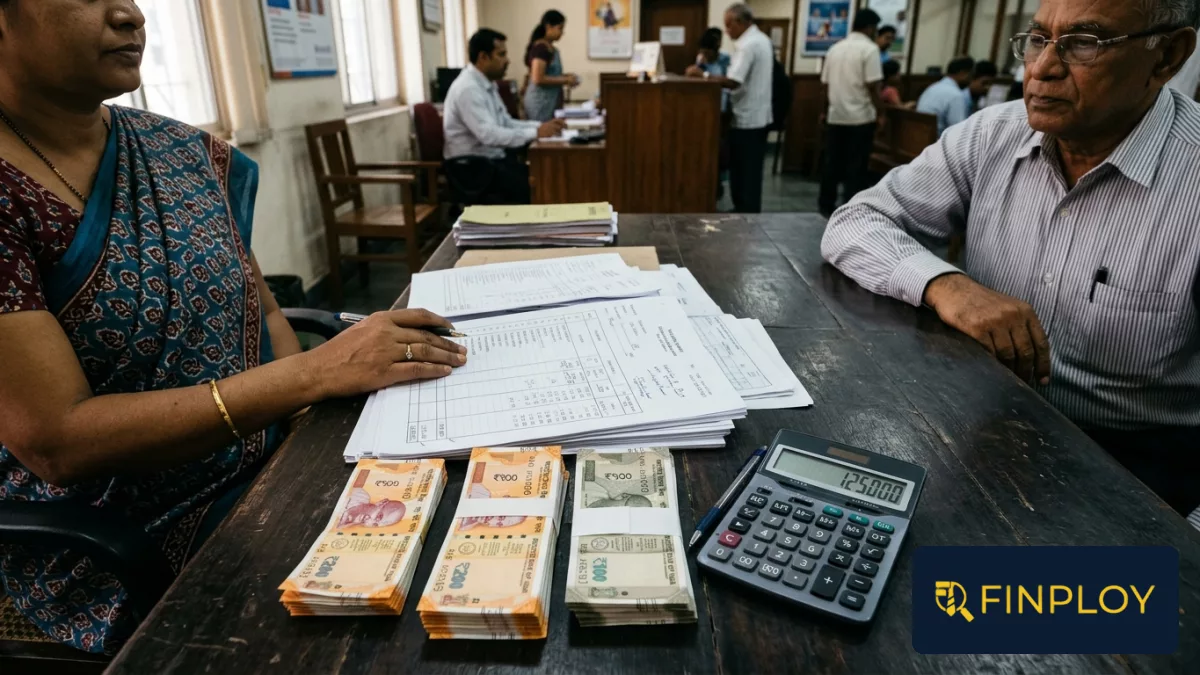
One 97 Communications, the parent entity of digital payments platform Paytm, has recorded a significant rise in profitability for the second quarter of FY27. According to the Economic Times, the company reported a consolidated net profit of ₹226 crore for the quarter ended September 30, 2026, marking a 976 percent year-on-year increase from ₹21 crore in Q2 FY26. Consolidated revenue from operations rose 28 percent year-on-year to ₹2,648 crore, compared to ₹2,061 crore in the corresponding period of the previous financial year, supported by active user expansion and operational cost efficiencies.
Variations in reported figures were noted across financial reporting channels. As reported by Business Standard and the Times of India, certain media sources cited reported profit after tax at ₹225 crore, representing a 10.7-fold increase, owing to minor rounding adjustments and exceptional item classifications across market analytics platforms. Fortune India reported that the high year-on-year growth rate was partly attributable to a low base in Q2 FY26, during which Paytm recorded a one-time impairment charge of ₹190 crore on a loan granted to its joint venture, First Games Technology. Excluding exceptional items, Paytm recorded an underlying profit before exceptional items of ₹229 crore for Q2 FY27.
Operational earnings reflected sustained momentum across core business segments. According to ET Now, Paytm achieved its sixth consecutive profitable quarter, with its Earnings Before Interest, Taxes, Depreciation, and Amortisation (EBITDA) doubling to ₹270 crore—a growth of approximately 90 percent year-on-year from ₹141 crore—while EBITDA margins expanded to 10.2 percent. Secondary analytics cited by StockGro recorded a minor variance, placing EBITDA at ₹267 crore with a margin of 10.08 percent.
Business expansion in credit distribution and infrastructure investment contributed significantly to operational leverage. According to Kotak Neo, financial services revenue, driven primarily by loan distribution and related credit products, expanded by 49 percent year-on-year to reach ₹912 crore in Q2 FY27. BQ Prime and Bloomberg reported that the board of directors approved capital infusions of ₹500 crore into subsidiary Paytm Cloud Tech and an additional ₹500 crore into its international entity based in Singapore. Kotak Neo and ET Now further reported that company management expects a potential 2.5 basis points improvement in payment processing margins following the implementation of the revised Unified Payments Interface (UPI) Merchant Discount Rate (MDR) framework, with earnings expected to stabilise over two to three quarters. Kotak Neo also noted that operational efficiencies were driven by artificial intelligence deployment across merchant acquisition, customer servicing, and backend workflows.
What this means for BFSI jobs
The strong financial trajectory of fintech platforms and their growing reliance on traditional banking partnerships hold concrete implications for professionals across the banking, non-banking financial company (NBFC), and technology service sectors. Finploy currently lists 43,262 open positions across the Indian financial services landscape, with primary employment hubs concentrated in Mumbai with 11,232 open roles, Bengaluru with 1,163 roles, Pune with 1,116 roles, Chennai with 1,031 roles, and Hyderabad with 834 roles.
According to insights from the Economic Times and Kotak Neo, the 49 percent growth in loan distribution highlights an accelerating pace of co-lending partnerships and distribution agreements between fintechs, NBFCs, and commercial banks. This expansion is directly boosting hiring demand for Alliance Managers, Co-lending Operations Specialists, and Product Managers tasked with maintaining cross-institutional credit pipelines.
As digital credit volumes expand, financial institutions are scaling their risk management functions. As reported by Fortune India and ET Now, rising credit volumes require banks and NBFC partners to expand recruitment in digital credit underwriting, portfolio risk analysis, and collection strategy analytics. Simultaneously, as noted by BQ Prime, Paytm’s ₹500 crore capital allocation to Paytm Cloud Tech emphasizes a persistent requirement for specialized technology professionals, including Cloud Architects, Machine Learning Engineers, Data Engineers, and Enterprise Software Developers across banking and fintech technology units.
Regulatory and operational shifts are also shaping specialized hiring. According to Kotak Neo and Business Standard, the transition to the revised UPI MDR structure is generating demand for experts in payment economics, merchant monetization strategies, regulatory compliance, and transaction settlement operations across payment service providers and partner banking institutions.
Sources

Archana Jain
Archana Jain is the Founder and CEO of Finploy Technologies, a recruitment platform built exclusively for banking, financial services and insurance (BFSI) hiring in India and Singapore. She has led Finploy since 2020 and has been Chief Operating Officer of Deeesha Finance & Finploy Finance Employment since 2016. Her work focuses on bank and NBFC hiring: leadership roles, home loan and LAP sales, CASA and retail banking, credit and underwriting, collections and recovery, and relationship management, across 1,500+ locations in India. She reviews Finploy Insights articles before they are published.